DATE
2021
Credit Suisse Investment Platform
As a Senior Product Designer, I worked intensively on the new suite of investment applications under the IWM 3.0 umbrella. IWM 3.0 involved a redesign of the current application, enhanced with some prognostic tools to calculate potential future returns.
Investment Platform
Finance
Role
Senior Product Designer, Interim Design Lead
Category
Investment platform
Company
Credit Suisse
Tools
Sketch, Invision
Team
7 Product Design, 3 Analysts, Research Team
Timeline
14 Months
Overview
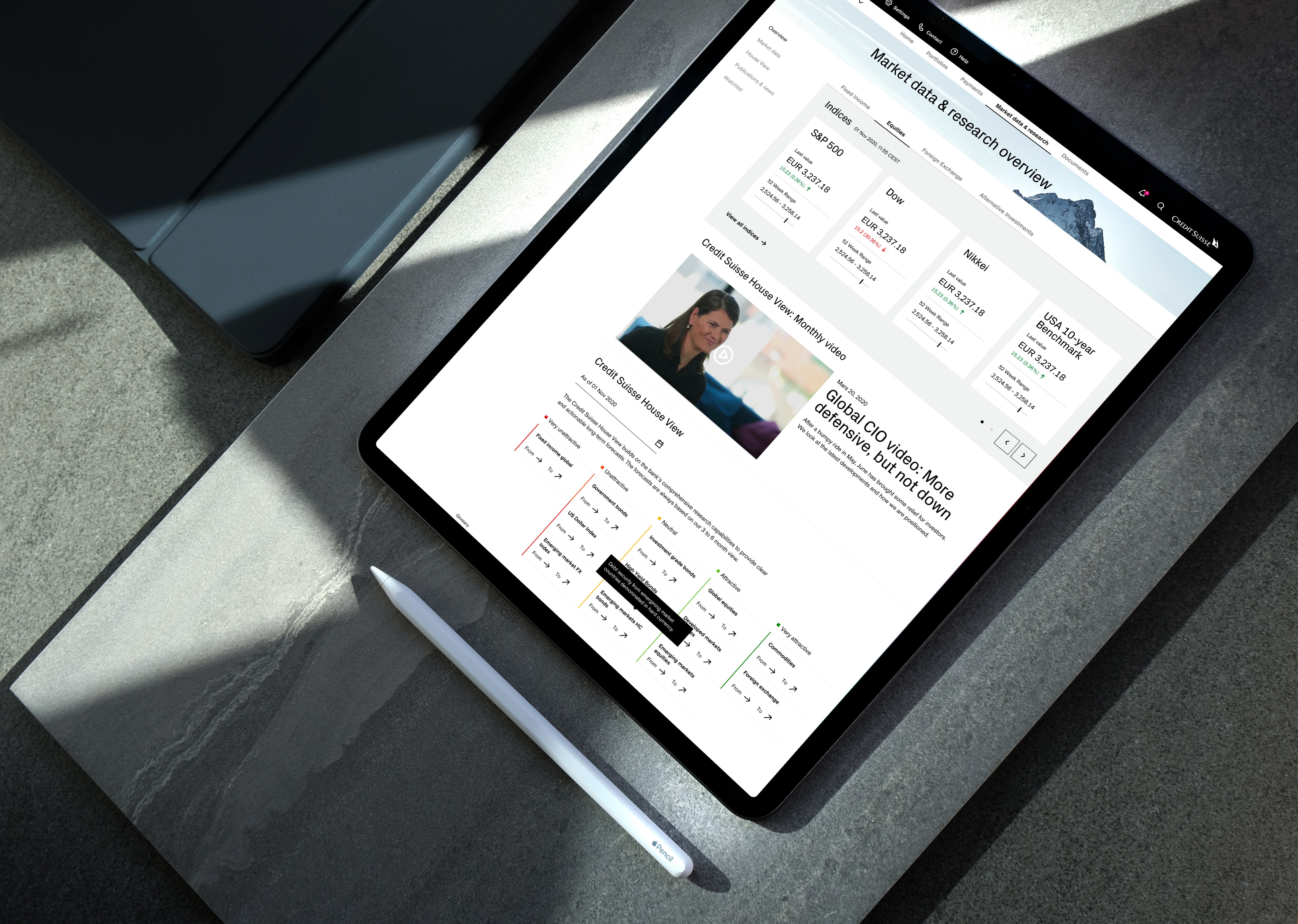
As Senior UX/UI consultant and interim design lead, I drove the redesign of Credit Suisse’s investment platform under the IWM 3.0 umbrella. The work spanned both Client and Relationship Manager channels and established an omnichannel framework: unified style guide, component library, and shared patterns. Over 14+ months, I combined complex feature design (portfolios, payments, hedging/leverage tools, proposal adjustment flows) with hands-on delivery governance to ship at scale.
Problem
Coming into the project midway, a lot of exploration was already done. As designers, we were expected to create, test, and design User Interfaces according to the project requirements. Eventually, the main problem was an overall discrepancy between the financial literacy and complexity of the design team and the solutions that were required.
Additional problems that originated from the topical literacy gap:
Motivational issues within the design team
Business analysts "designing the app" with instructions
Gaps in solution design due to the complexity
Poor as-is application analysis, leading to requirements gaps
Problems caused by a bad collaboration model and silos:
Poor dev quality and lots of UX Quality Assurance work
Solution
As a designer, I worked on creating an easy-to-use portfolio section, I was personally involved in initial conceptual designs involving proactive investment advice and a better RM-Client dialogue through the online channel, which we tested with users. Eventually, I moved to design the portfolios and payment flows, as well as designing tools for hedging and leveraging, and tools for adjusting generated investment proposals.
As a designer, I had to take up a lot of the more complex design tasks to cover knowledge gaps.
Eventually, as a team lead, I activated the development and design teams with the global project managers to collaborate more closely to fix many of the release defects.
I created designs and prototypes, and presented solutions to stakeholders of the Credit Suisse Digital project across the globe. Over several weeks, we were able to fix the high-priority items and ensure the platform launch was saved, saving over 100'000 Swiss Francs in additional development costs.
My Impact
Design leadership
Coordinated a team of 6 designers, instituted a defensible design process to reduce scope churn, and mobilized cross‑functional collaboration with global PMs and engineering.
Complex Feature Design
Led portfolios and payments; designed hedging/leveraging tools and flows to adjust generated investment proposals; contributed to conceptual prognostic tools for future returns.
Research & validation
Partnered with the internal UX research team to run iterative InVision tests (2 days, 5 users/day), feeding insights directly into UI and flow refinements.
Delivery governance
Drove a 12‑week QA/hyper‑care push with developers; triaged high‑priority defects to secure launch and save over 100’000 CHF in additional development costs.

Process
As a designer I was initially involved in only a few dedicated parts, but as time went on, I was able to affect more of the end-to-end product development process, and eventually helping the team save 100'000 CHF by resolving issues and preventing an additional QA cycle and development cycle before product launch.
Discover
Mapped the as‑is platform with BAs and process experts, indexed user flows, and clarified screens needed. Identified literacy gaps and collaboration failures that blocked delivery.
Define
Produced wireframes aligned to a rigid, neutral on-brand design system. Created prototypes and presented solution designs to global stakeholders. Established process controls to guard scope and keep requirements actionable and testable.
Build
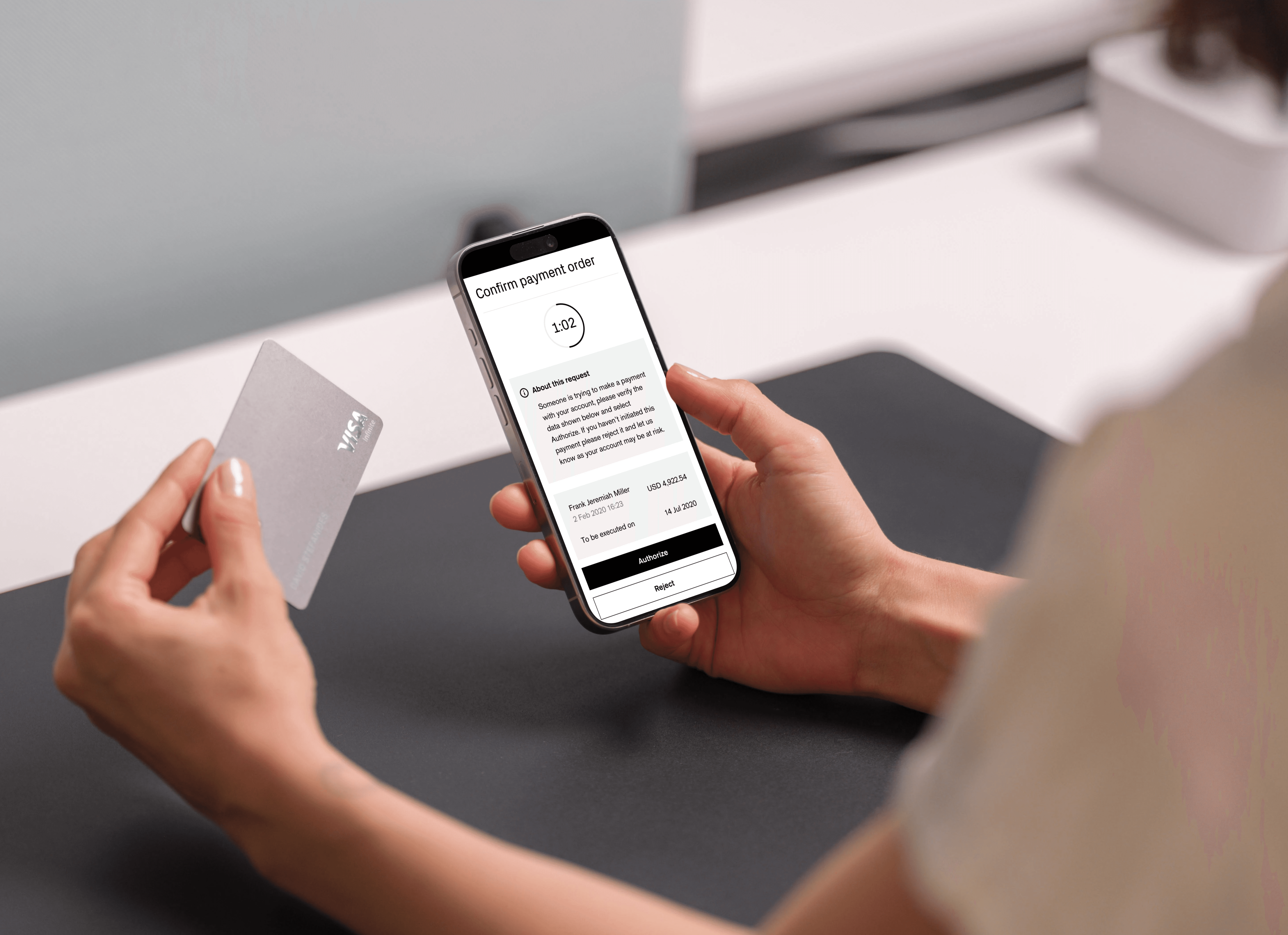
Specified flows and UI for portfolios, including complexity regarding FX accounts, cross-border payments and investment adjustments like hedging and leveraging. Iterated to final UI across responsive breakpoints.
Design Lead
Design Process Methodology
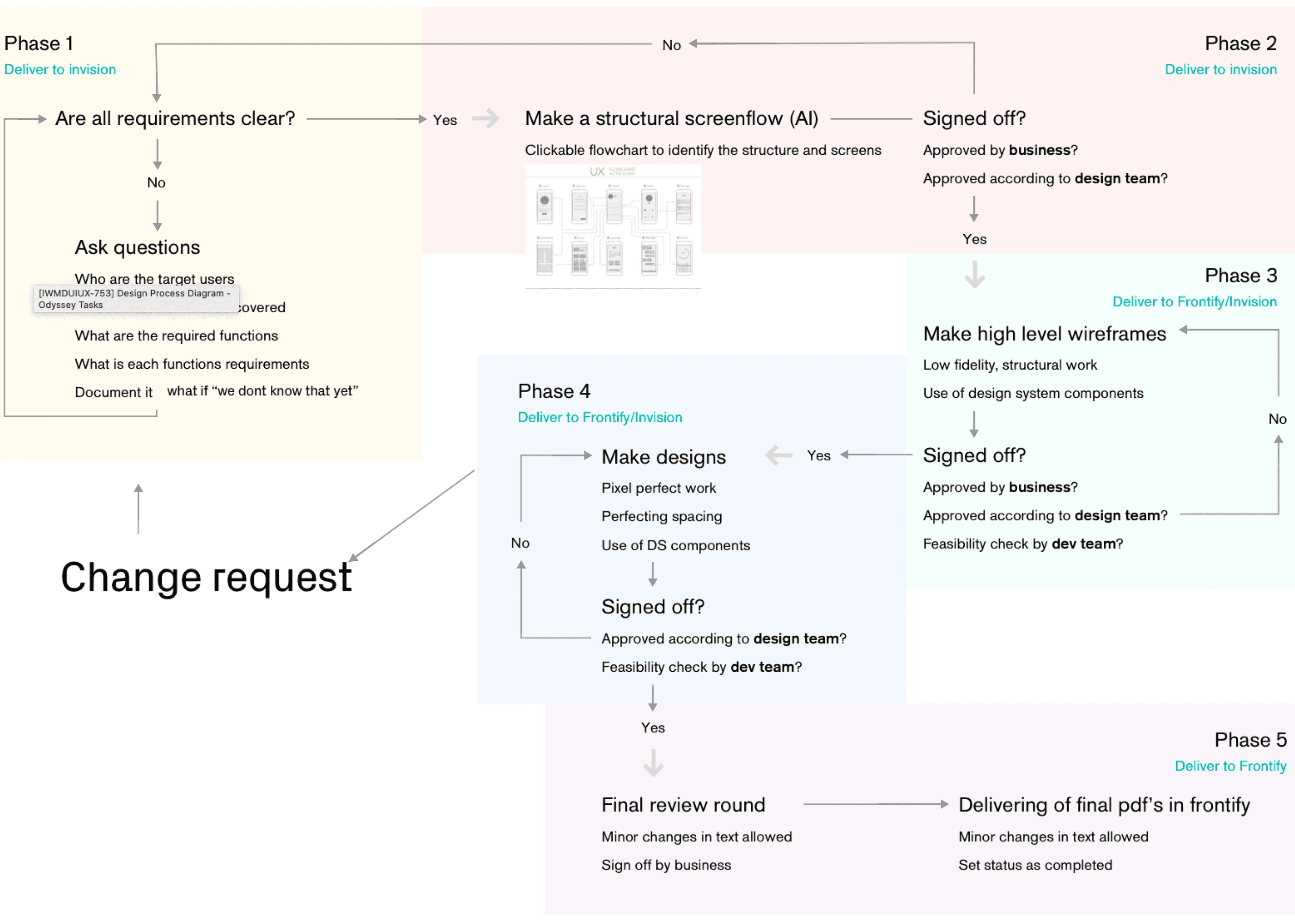
As design lead, I created a process map to stop recurring mistakes in our design workflow. At the time, shifting requirements were a constant pain point; this framework helped protect scope and keep teams aligned. I held designers accountable for following the steps, making them practical and actionable, and shielding the team from change requests that fell outside our original mandate. As the image suggests, effectiveness over beauty was key here.
Application Architect
Research, User Journey and Information Architecture
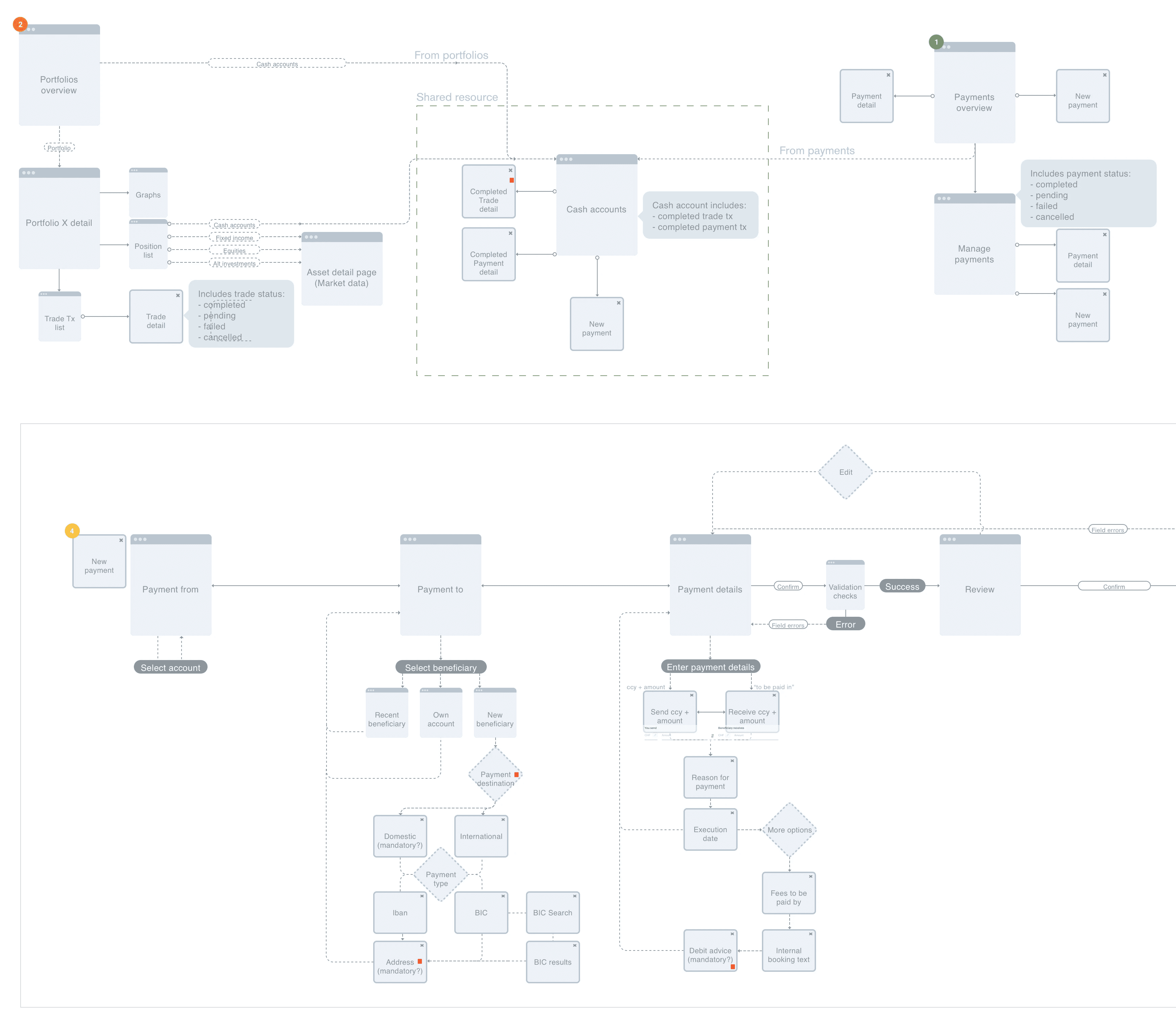
During the user journey and research phase, we conducted an as‑is analysis of the application and interviewed business analysts and process experts to map user flows and required screens. I created multiple user journeys and application architecture maps to manage the project’s complexity.
This process became our standard and we repeated it across projects within the platform.
From blueprint to reality: bringing wireframes to life
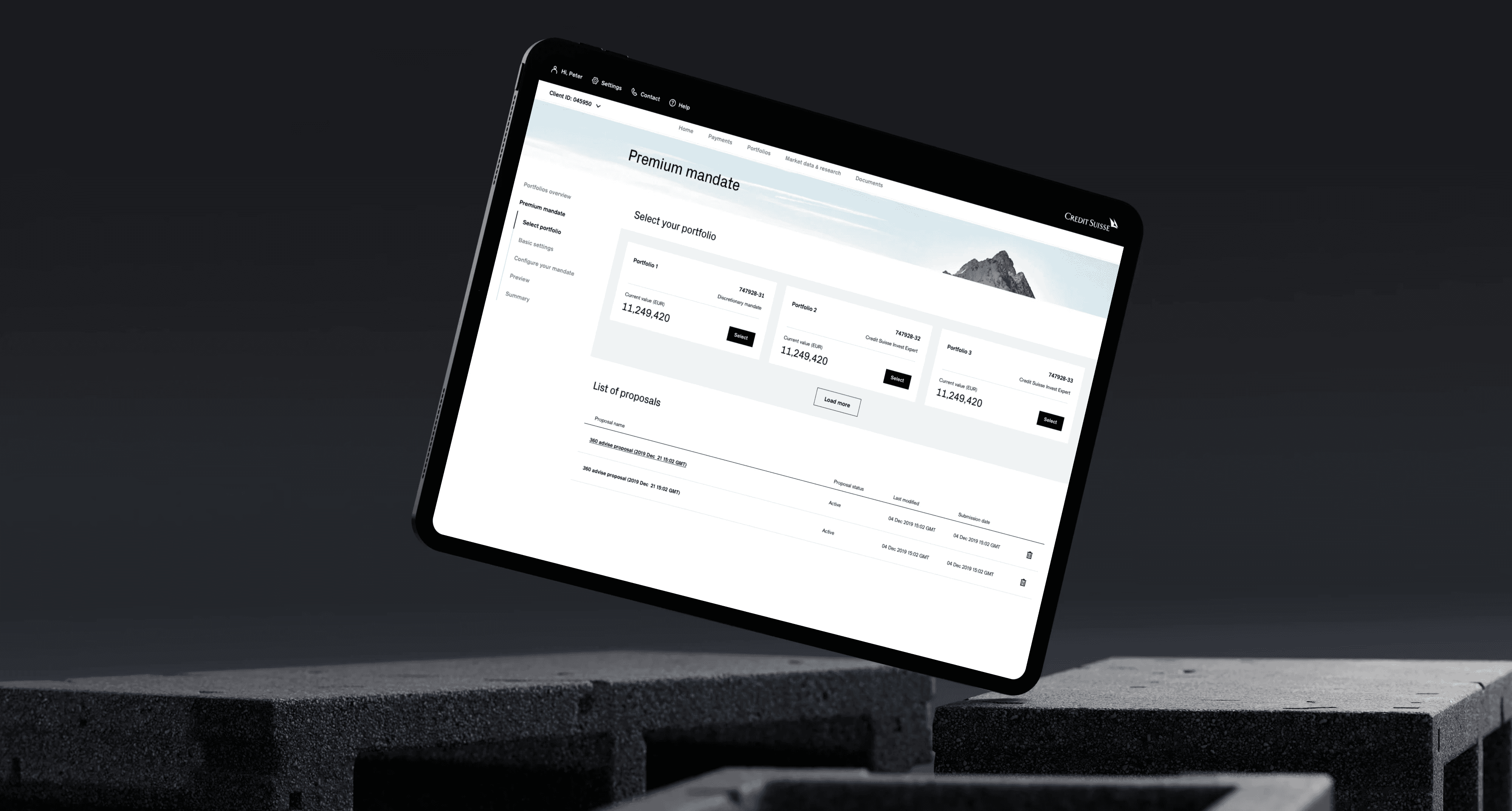
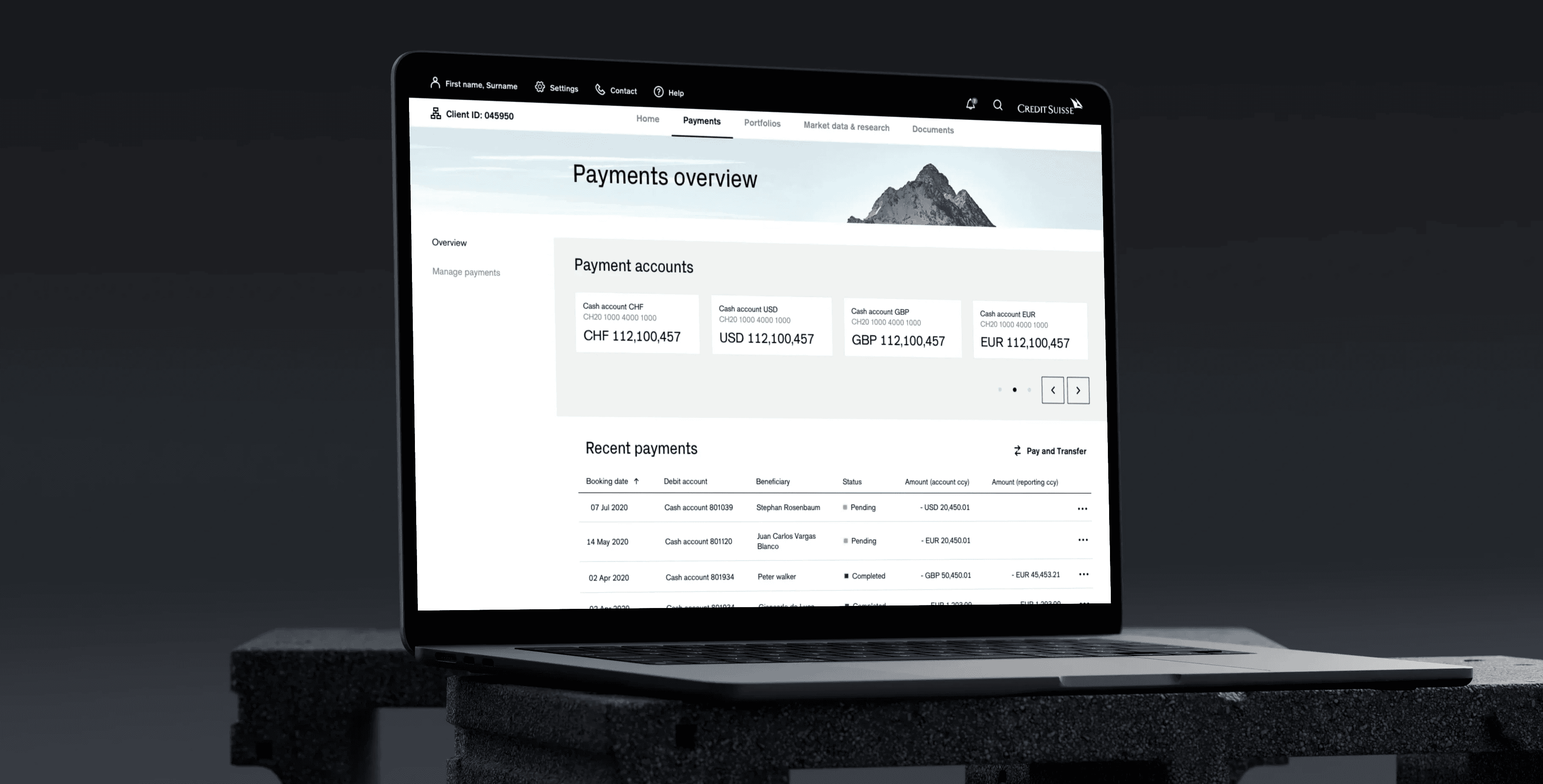
Working with a strict and neutral design system meant our wireframes closely resembled the final product from the very start. Each screen I created served as the foundation for Invision prototypes, which we then shared with real users during research sessions. This hands-on testing with the User Research team allowed us to gather valuable feedback early and often.
Keeping design closely on brand
UI DESIGN
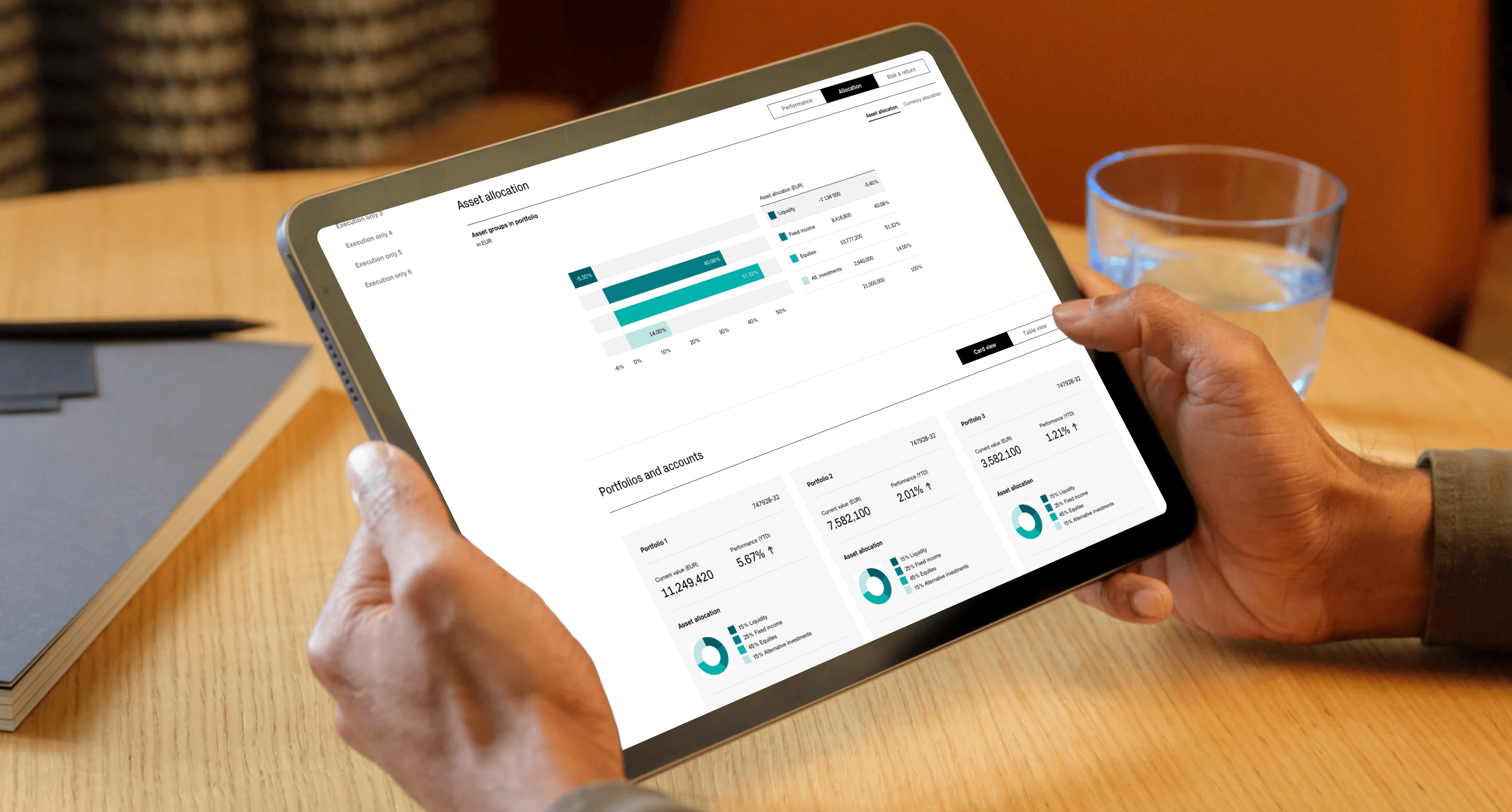
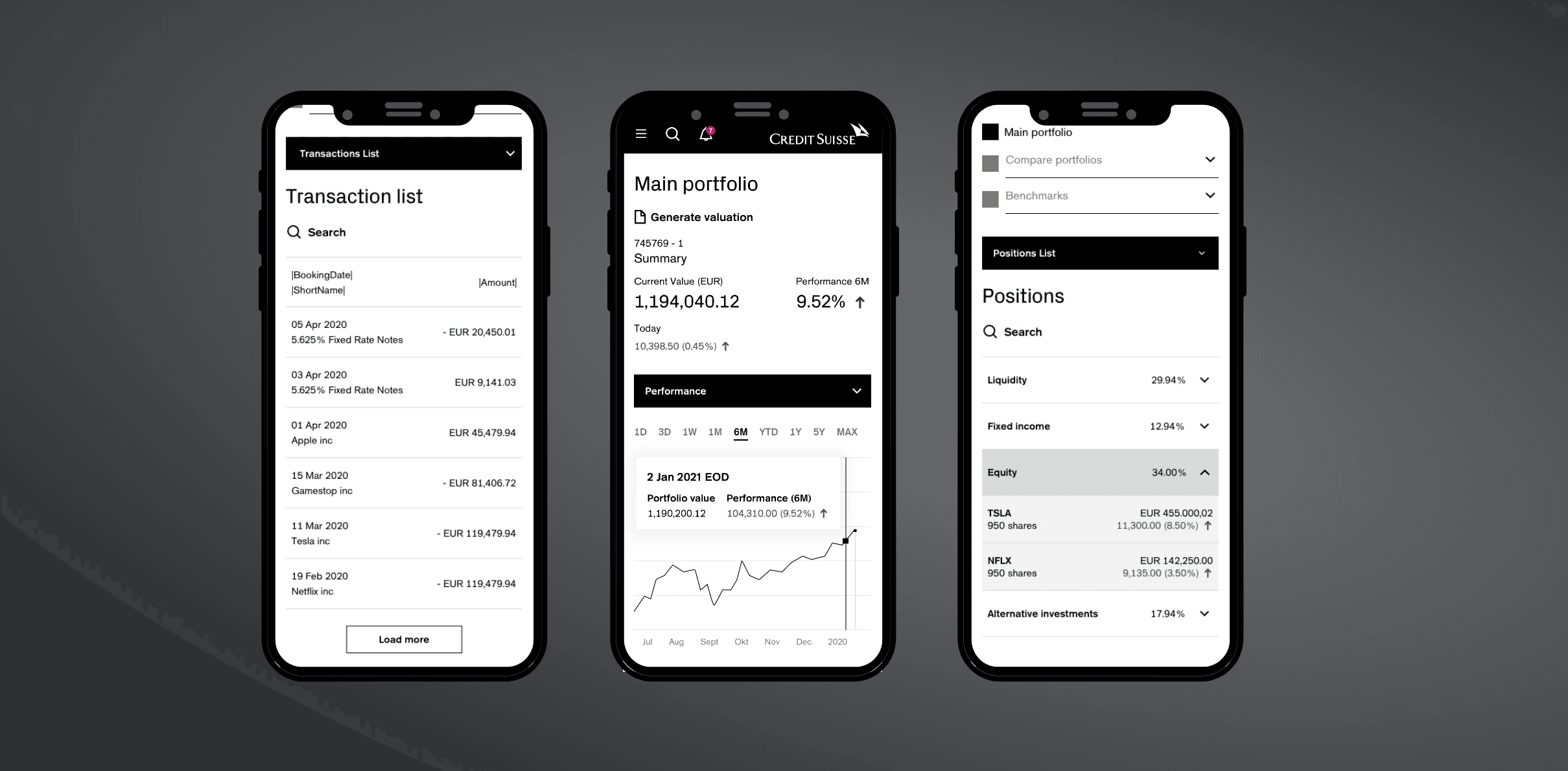
Product interfaces were created using insights gathered from the "UX Lab," achieving a careful balance between user needs and business objectives. The complexity of the topics required multiple rounds of user testing, with each iteration leading to refinements based on direct feedback. This ongoing process allowed the designs to truly connect with users.
Throughout the project, Credit Suisse's brand and design guidelines were followed closely in collaboration with the brand management team to ensure a consistent and trustworthy experience. Each screen was thoughtfully designed for various breakpoints (375, 768, 1024, and 1440px), resulting in a seamless interface across all devices.
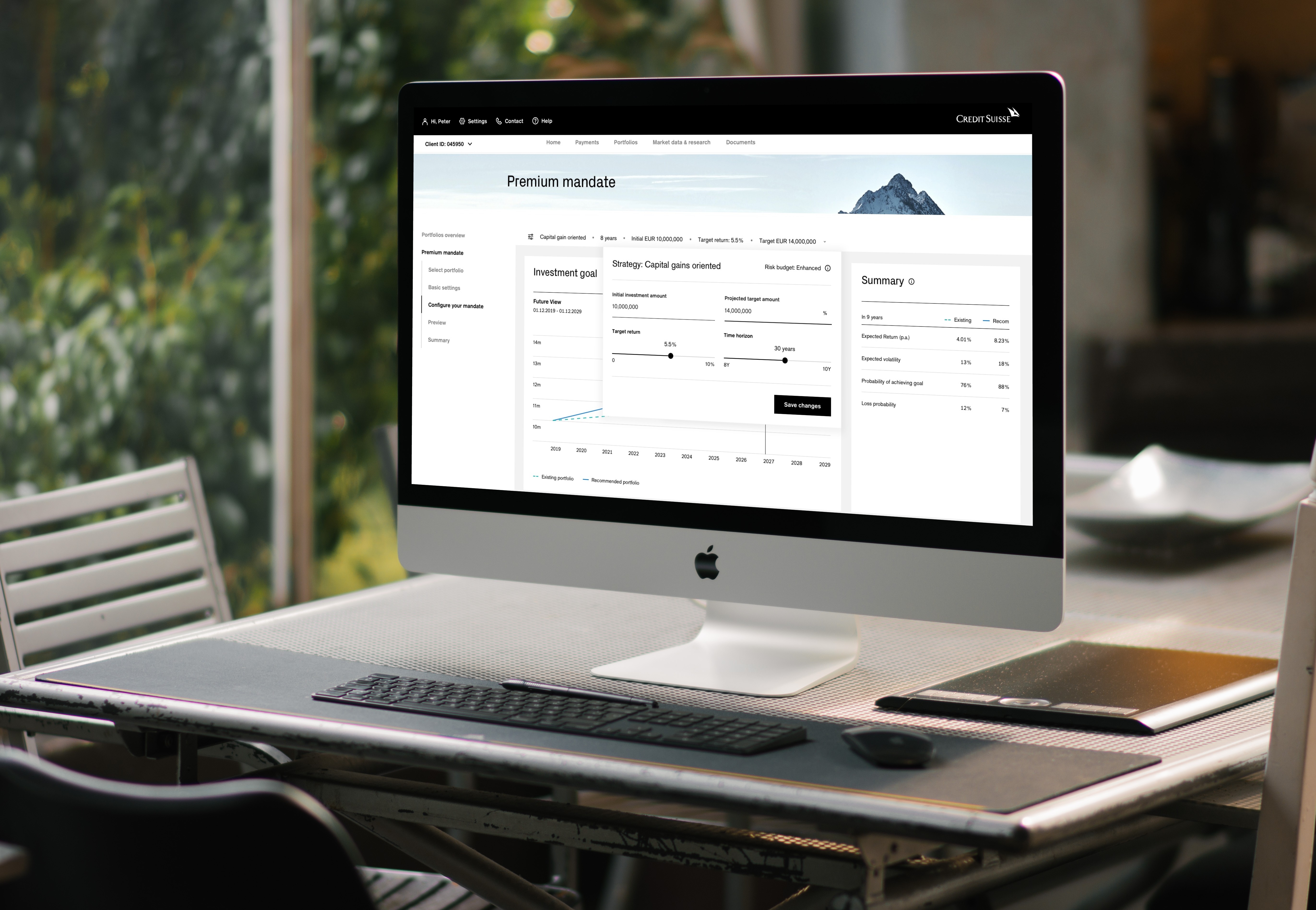
Designing a Digital premium mandate experience
FEATURE DESIGN
Problem
When I entered the project, the brief was clear: make complex portfolio construction and mandate parameters understandable and actionable for both clients and Relationship Managers. The like‑for‑like redesign risked carrying forward legacy workflows and grey‑heavy UI. Requirements shifted frequently, and mandate constraints were sometimes unclear, making scope control and QA hard.
Approach
Mapped the as‑is application and interviewed business analysts and process experts to index mandate rules, hedging options, and portfolio allocation flows.
Created user journeys and an application architecture map to clarify data dependencies and screen functionality.
Standardized components and patterns in an “omni-channel” framework so premium mandate views stayed consistent across devices.
Built dense wireframes that matched the system’s constraints and could be tested quickly with the UX Lab team.
Design
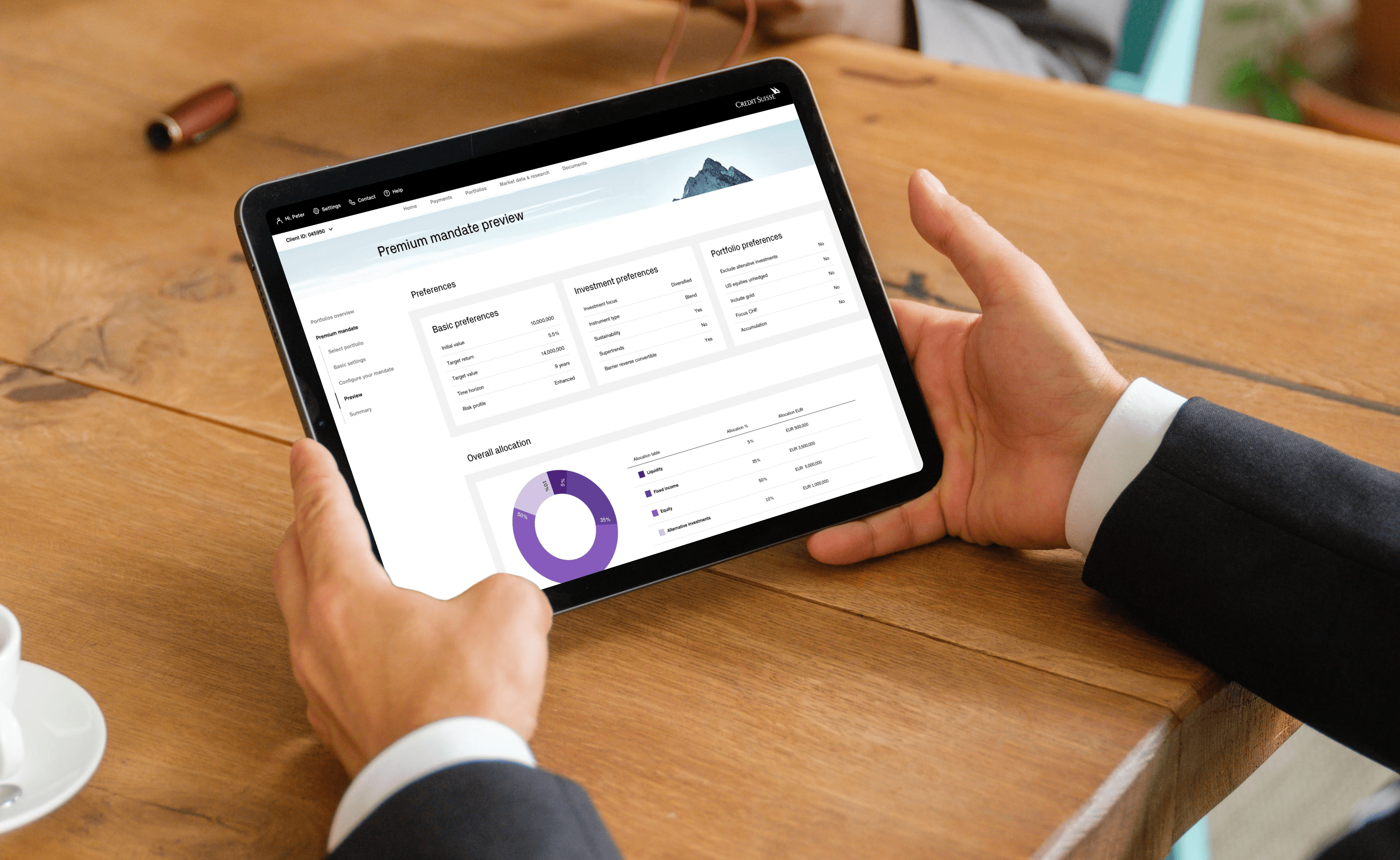
A scan‑first mandate overview with clear risk parameters, allocation breakdowns, and constraint checks means no buried details.
Side‑by‑side portfolio and mandate data to keep context visible while adjusting positions.
Responsive patterns for on‑the‑go review: compressed cards, clear graphs, and summaries to support RM conversations.
Additionally I covered Hedging and Leveraging UI's which are not in this portfolio

Learnings
The impact of genuine designer commitment on design outcomes
This project taught me that designers create better work when they are genuinely interested and informed about the subject. Without this connection, important decisions may shift to others, often at the expense of good design.
Leading platform analysis and requirements gathering in redesigns
Whenever I work on a redesign, I know how critical it is to first analyze the current platform and gather detailed requirements. I make it a priority to lead these efforts or stay deeply involved, ensuring we have a clear understanding of user needs and opportunities before crafting new solutions. This hands-on involvement lays the foundation for a more effective and meaningful redesign process.
Breaking down walls for better collaboration
Throughout the project, I witnessed firsthand how crucial it was for developers and designers to communicate at every stage. We needed to align on feasibility, timelines, and quality, but the entrenched silos within Credit Suisse's corporate culture often got in the way. This experience showed me just how important it is to bridge those gaps and foster true collaboration for successful outcomes.
Outcomes and Business Impact
Broke silos by activating PMs, designers, and engineers to work in tighter loops. Sat side‑by‑side with external developers brought in during go‑live/hyper‑care to resolve front-end issues quickly, leveraging awareness of back‑end data structures and front‑end frameworks to reduce risk and turnaround time.
OUTCOME
Complex features delivered, team led
I organized and led a team of 6 designers through a critical release, while at the same time designing and presenting portfolios, payments, hedging/leverage tools, and proposal‑adjustment flows to international stakeholders, prototyping and user-testing along the way.
OUTCOME
Development issues highlighted, silos broken, processes improved
I surfaced the root causes behind defects, brought design, delivery, and engineering into tighter loops, and put clearer requirements and governed components in place, reducing ambiguity and improving handoffs.
OUTCOME
Measurable savings: Money saved, launch on time
Over 12 weeks I drove focused QA, including late‑night sessions with two external engineering consultants, fixing UI implementation issues to avoid the cost and delay of another QA cycle. By fixing high‑priority problems before go‑live, we avoided expensive rework later and saved over 100’000 CHF, while keeping the launch on track.